


Best Automatic Water Fountain for Dogs
Table of Contents
- Why Automatic Water Fountains Matter for Dog Hydration
- Quick Comparison: VitalFlow™ Pet Fountain Options
- VitalFlow™ Pet Fountain: Premium Stainless Steel Design
- Capacity and Tank Size: Choosing the Right Volume for Your Dog
- Filtration, UV Sterilisation, and Water Freshness
- How to Clean a Dog Water Fountain: Maintenance Routine
- Dog Water Fountain Filter Replacement: Schedule and Cost
- Choosing the Right Fountain for Your Dog's Needs
- Frequently Asked Questions
Last Updated: October 14, 2026
Why Automatic Water Fountains Matter for Dog Hydration
Dogs don't always drink enough from static bowls. A best automatic water fountain for dogs provides fresh, circulating water that encourages more consistent drinking, supporting kidney function, digestion, and overall wellbeing, especially for dogs prone to urinary tract infections.
Many owners overlook hydration as preventative care. Stagnant bowl water collects bacteria and loses appeal, while moving water tastes fresher to dogs, translating to higher daily intake with no effort on your part.
At Fur & Feather, we designed the VitalFlow™ Pet Fountain to solve this, combining stainless steel construction with filtration and UV sterilisation to keep water clean and circulating.

Pro Tip
The best time to introduce a fountain is before a health issue arises. Prevention through consistent hydration is far simpler than managing dehydration-related problems later.
Quick Comparison: VitalFlow™ Pet Fountain Options
| Product | Price | Best For | Key Feature |
|---|---|---|---|
| VitalFlow™ Pet Fountain | $149.00 | General hydration | Stainless steel, UV sterilisation, 5.5L capacity |
| VitalFlow™ + 3 Filters Bundle | $179.00 | Cost-conscious buyers | Includes 3 replacement filters, saves $9.00 |
| VitalFlow™ + 6 Filters Bundle | $199.00 | Long-term value | Includes 6 replacement filters, saves $22.00 |
| Replacement Filters | $39.00 | Filter maintenance | Quad filtration system, 3 or 6 pack options |
The bundles offer genuine savings for long-term owners. Since filters need replacing every 2-4 weeks, buying upfront cuts cost per filter. New owners can start with the fountain alone and add filters later.

VitalFlow™ Pet Fountain: Premium Stainless Steel Design
The VitalFlow™ Pet Fountain treats hydration as a design problem, not an afterthought. Stainless steel resists corrosion, won't absorb odours, and cleans thoroughly, unlike plastic fountains that scratch and harbour bacteria in crevices.
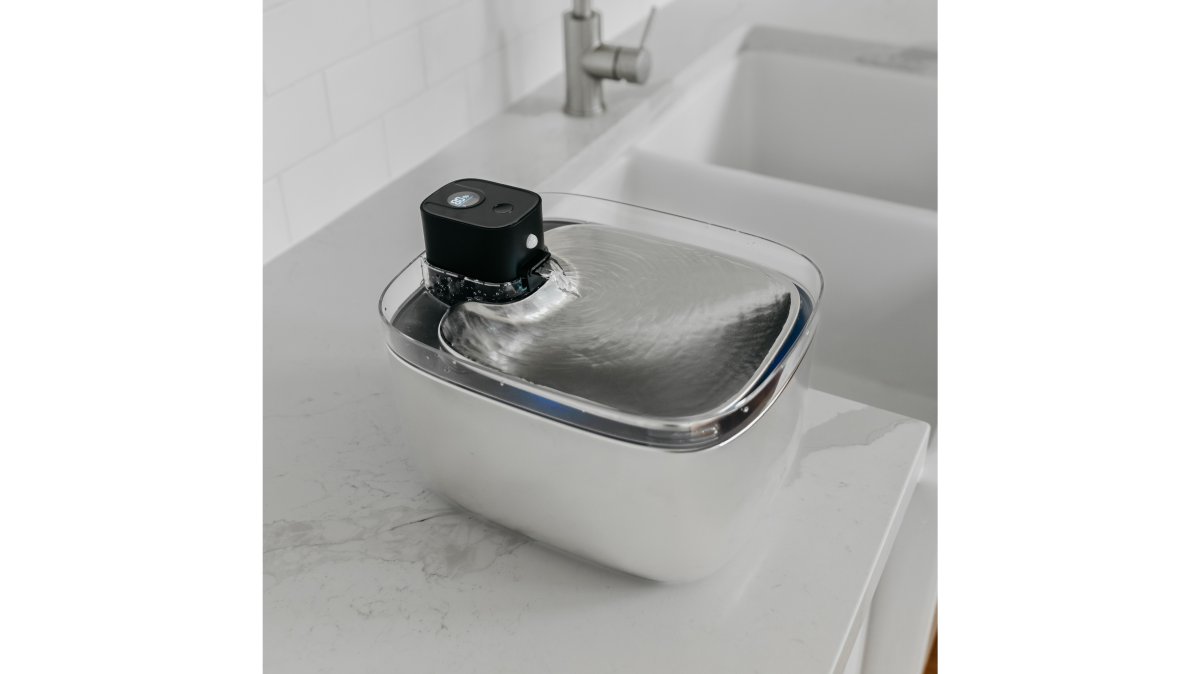
The 5.5L capacity means fewer refills and handles multi-pet households. The rechargeable battery eliminates trailing cords.
Circulating water stays cool, which appeals to dogs more than room-temperature bowl water. The low-profile design gives senior dogs easy access without stretching or jumping.
Key Takeaway
Premium materials aren't just about aesthetics, stainless steel directly improves hygiene, durability, and how appealing the fountain is to your dog over months of daily use.
Capacity and Tank Size: Choosing the Right Volume for Your Dog
The 5.5L capacity suits most homes, but consumption varies: a small dog alone might empty it every 3-4 days, while a large dog or multi-pet household could empty it in 24-48 hours. Knowing your household's usage prevents the fountain from sitting empty.
Larger tanks reduce refill frequency, which matters for busy owners. The trade-off is counter space, a 5.5L fountain occupies roughly the footprint of a standard coffee maker, manageable in small kitchens and unobtrusive in larger homes.
Water depth matters too: larger dogs need adequate depth to drink comfortably, while smaller dogs and puppies need accessible levels. The VitalFlow™ design accommodates both without separate products.
Filtration, UV Sterilisation, and Water Freshness
A best automatic water fountain for dogs must filter actively, not just circulate stagnant water.
UV sterilisation adds a second layer: while filtration removes physical particles, UV light destroys bacteria for cleaner water. Dogs with sensitive stomachs or recurring urinary issues benefit.
The difference shows in clarity and smell. Stagnant bowl water develops a faint odour within hours, while fountain water stays fresh.
Watch Out
Filtration systems only work if you replace filters regularly. A clogged filter reduces water flow and defeats the sterilisation process. Replace filters every 2-4 weeks depending on usage, this is non-negotiable for water quality.
How to Clean a Dog Water Fountain: Maintenance Routine
Cleaning frequency depends on water quality, pet count, and how much food ends up in the water. Hard water leaves scale faster; multi-pet homes generally need a weekly clean, while single-dog soft-water homes can stretch to 10-14 days. Cloudiness, a slippery reservoir, or a musty smell all mean it's overdue.
Why biofilm is the real enemy
Biofilm is the slimy layer bacteria form on wet surfaces, and it builds fastest where you can't see: inside the pump housing, along tubing, and in reservoir seams. A fountain can look clean and still harbour it, which is why rinsing and refilling isn't the same as cleaning the parts water flows through.
Step-by-step cleaning routine
- Unplug or power down the pump before you touch anything wet. Never clean a fountain while the pump is running.
- Disassemble fully. Remove the pump, impeller cover, filter cartridge, and any tubing. If the pump has a removable front plate, take it off, that's where hair and grit collect.
- Rinse all components under warm running water to lift loose debris.
- Soak the reservoir and hard plastic parts in warm water with a small amount of white vinegar for 15-20 minutes to dissolve mineral scale. For heavier scale, extend to 30 minutes.
- Soak the pump separately in vinegar water for 20-30 minutes if flow has slowed. Use a soft brush or cotton bud to clear the intake ports and impeller well.
- Scrub internal surfaces with a soft brush. Pay attention to the corners of the reservoir and the inside of the spout where water exits.
- Rinse everything thoroughly until no vinegar smell remains. Residual vinegar can put dogs off drinking.
- Air-dry completely before reassembly. Damp reassembly encourages biofilm to return faster.
Never use bleach, harsh chemicals, or abrasive scrubbers on stainless steel, they pit the surface and create crevices where bacteria hide. Check dishwasher-safe components against manufacturer instructions, since high heat can warp seals and impellers.
Pump care is where most fountains fail
Most pump failures trace to mineral deposits or hair clogging the intake. A pump that hums but moves little water is usually partially blocked, not dead. Genuinely seized pumps are the cheapest component to replace.
A schedule that actually sticks
A fixed weekly slot works better than cleaning "when it looks dirty." Keep a spare filter cartridge on hand so a clean never waits on a delivery, and if you have hard water, add a monthly descaling soak, scale builds silently under the waterline.
Watch Out
A clogged or overdue filter is worse than no filter. It restricts flow, lets water sit longer in the reservoir, and gives a false sense of protection. If you can't remember when you last changed it, change it now.
Key Takeaway
Cleaning the fountain is not about making it look nice, it's about breaking the biofilm cycle in the pump, tubing, and reservoir seams that a quick rinse never reaches.
Dog Water Fountain Filter Replacement: Schedule and Cost
Replace filters every 2-4 weeks depending on household size and water quality: two dogs with hard water may need every 2 weeks, while a single dog with soft water can stretch to 4. The safest approach is the shorter interval, a filter that's discoloured or slowing flow is already past its useful life.
What filters actually cost over a year
Filter cost is the main ongoing expense of fountain ownership, and it's worth doing the maths before you buy. At a 2-week replacement interval, that's 26 filters per year. At a 4-week interval, it's 13. The table below shows the annual filter spend at each cadence, using the single-pack price and the bundle pricing.
| Replacement cadence | Filters per year | Annual cost (single pack) | Annual cost (6-pack bundle rate) |
|---|---|---|---|
| Every 2 weeks | 26 | $1,014.00 | $748.80 |
| Every 3 weeks | ~17 | $663.00 | $489.60 |
| Every 4 weeks | 13 | $507.00 | $374.40 |
Those figures make one thing clear: filter cadence matters more than the sticker price of the fountain. A household that replaces every 4 weeks spends roughly half what a 2-week household spends over a year. If you have soft water and one dog, stretching to 4 weeks is reasonable.
The full cost of ownership, not just filters
Filters are the biggest recurring cost, but a realistic annual budget should also account for:
- Filters, the dominant cost, as shown above.
- Electricity, a pump draws only a few watts, costing a few dollars a month at most.
- Pump replacement, the most common failure point; expect one every 12-24 months depending on water hardness and descaling diligence.
- Cleaning consumables, white vinegar and a soft brush cost very little but should be counted.
- Your time, a weekly clean takes 15-20 minutes, roughly 13-17 hours a year.
Is it worth it?
Honestly, a fountain is a convenience and hygiene purchase. The case rests on whether your dog drinks more from moving water, whether you want filtration and UV sterilisation, and whether reduced refills fit your routine.
How to reduce filter costs without cutting corners
- Buy in bundles. The 6-pack rate cuts the per-filter cost versus single packs.
- Match cadence to your water. Don't replace every 2 weeks out of habit with soft water and a small dog, but don't stretch past 4 weeks either.
- Clean the fountain properly. A well-maintained fountain keeps filters working closer to their full interval; a neglected one clogs them early.
- Track replacements. Write the date on the filter housing or set a reminder, a forgotten filter degrades water quality silently.
Watch Out
The most common mistake is treating filter replacement as optional once the fountain "still looks clean." Filters trap what you can't see. Skipping replacements doesn't save money, it just moves the cost to your dog's health.
Key Takeaway
Budget for filters, not just the fountain. At a 2-week cadence you'll spend roughly the price of the fountain itself on filters within the first year, so buy in bundles and match your replacement interval to your water hardness and household size.
Choosing the Right Fountain for Your Dog's Needs
Different dogs have different hydration needs. Large breeds (Labradors, German Shepherds, Golden Retrievers) drink more and benefit most from the 5.5L tank, which reduces daily refills.
Puppies need accessible water that doesn't require stretching, and the VitalFlow™'s low-profile design also suits senior dogs with mobility issues.
Dogs that ignore water bowls often respond immediately to fountains, the movement and sound attract attention.
Multi-pet households should consider whether all pets will share or if territorial issues arise. Cats and dogs can share, though some households find separate fountains reduce conflict.
Best For
The VitalFlow™ Pet Fountain suits health-conscious owners, busy professionals, multi-pet households, and dogs with a history of urinary or kidney issues. It's worth the investment if hydration is a priority for your pet's long-term wellbeing.
A best automatic water fountain for dogs isn't a luxury, it's preventative health care that fits into your daily routine.
Frequently Asked Questions
Can an automatic water fountain really encourage my dog to drink more?
Yes. Moving water is more appealing to dogs than still water in a bowl, which mimics natural flowing water sources they instinctively prefer. Many dogs drink more consistently when given access to circulating water from an automatic water fountain. This is particularly helpful for dogs prone to dehydration or those with a history of urinary tract issues, as increased water intake supports kidney function and overall health.
What makes a stainless steel dog water fountain better than plastic?
Stainless steel is non-porous, non-toxic, and resists bacterial growth far better than plastic. It doesn't absorb odours or stains, remains durable through years of use, and is easier to sanitise thoroughly. Plastic fountains can develop biofilm and harbour bacteria in microscopic scratches over time, making stainless steel the more hygienic choice for long-term pet health.
How often should I replace the filter in a dog water fountain?
Replace the filter every 2-4 weeks depending on usage and water quality. Households with multiple pets or harder water may need more frequent changes. The quad filtration system in VitalFlow™ fountains removes bacteria, hair, dirt, food and other nasties, residual chlorine and foreign matter, and heavy metal ions in water, but filters become less effective once saturated. Regular replacement maintains clean, fresh water and prevents biofilm buildup in the tank.
Is a 5.5-litre capacity large enough for my dog?
A 5.5-litre capacity suits most households with one to two dogs, providing several days of fresh water before refilling. The compact size also fits standard kitchen counters without dominating the space, making it practical for apartments and smaller homes whilst still delivering substantial hydration support.
How do I know the UV sterilisation actually works?
UV sterilisation destroys bacteria for cleaner water. Combined with mechanical filtration and activated carbon, this multi-stage approach ensures water stays clean between refills. The VitalFlow™ fountain's quad filtration system works alongside UV sterilisation to remove particles, chlorine, and heavy metals, creating a comprehensive water purification process that keeps your dog's water source hygienic.